01
The glyph
“logo should be a carbon atom. element 6, thats the whole brand”
Daniel, to the machine
Three flat ellipses and six dots, the same atom icon on ten thousand science posters. Correct enough to pass, generic enough to belong to nobody.
Everyone is about to discover the first half. Almost nobody has priced in the second. That gap is the only thing worth selling right now, and it closes.
What follows: what slop actually is, why the people you would normally hire are about to flood you with it, and the one skill that survives.
The platforms took aiming off the table. You do not out-target anybody now. What is left to control is the one thing the algorithm cannot produce: whether the ad is any good. Meta says this out loud, in Meta’s own words:
“The biggest constraint you can put on your Meta strategy is the constraints you place on your creative process.”
Meta for Business · on creative diversification
Their own case study has an advertiser going from three or four new creatives a week to roughly fifty. Read that as an instruction, because it is one. And the moment it landed, a million advertisers reached for the obvious answer and produced fifteen million AI ads in a single month. That figure is Meta’s too.
AI did not lower the cost of making things. It raised the cost of being ignored. Anyone selling you easy is selling you the thing that gets scrolled past.
Not “made with AI.” Call everything a machine touched slop and you have called the entire economy slop, your bank and your groceries included, and talked yourself out of having a standard at all.
Here is the standard. Merriam-Webster made slop its 2025 word of the year: “digital content of low quality that is produced usually in quantity by means of artificial intelligence.” Low quality, in quantity. Notice which word is doing the work. Not the machine. The quality.
Slop is not a tool. Slop is an absence.
The machine is a multiplier. It takes whatever taste is holding it and gives you more of that, faster, at scale. Slop is a person’s judgment, amplified, when there was not much judgment there to begin with. Three absences, and every one is a person deciding not to do something:
The first output shipped. Nobody pushed it a second time, because a second time costs something and the first one was free.
Nobody decided. The machine fanned out, handed over forty options, and all forty went live, because choosing means being responsible for the choice.
The watermark in the corner. The sixth finger. The word the model invented. All of it sitting right there, and looking was not anybody's job.
All three are free to fix. Nobody fixes them, because fixing them is work, and the entire promise of the machine was that the work went away.
Researchers from Columbia, Harvard, TU Munich and Carnegie Mellon ran the largest test anybody has run on this: over three hundred thousand ads, half a billion impressions. The AI-generated ads won. Higher click-through, 0.76 percent against 0.65. If your whole pitch is that AI creative performs worse, that study ends you, and it should.
Then comes the line underneath it, which is the most valuable sentence in this entire argument:
“Advertisements perceived as AI-generated underperformed regardless of whether they were actually created by AI or human designers.”
Read it twice. The punishment does not attach to the tool. It attaches to the look. Make something by hand that reads as machine-made and you eat the penalty anyway. Seven percent of people say visible AI content makes them trust a brand more. Thirty-one percent say it makes them trust it less.
Use the machine as hard as you like. Run it at the volume the platform is asking for. The only rule that survives contact with the data is that the finished thing must never announce what made it.
The difference is not the tool, the budget, or the render time. The difference is that one person had a point of view before they opened the software and the other did not.
There is a video going around that takes apart the entrepreneur-digital-nomad-Pilates-crypto scene in Bali. Somebody in it explains that they got an AI coach for their AI coach. It is obviously AI. Nobody is fooled for a second, and it does not want you to be. It is also very good, and it is not slop.
So the penalty is not for looking like AI. It is for looking like AI while pretending you are not.
Self-awareness is the hat. The full argument, jester included, is a field note: The jester’s hat.
What people are fed up with, laughing at, and quietly lying about, this week. Humans get this first. The model reads about it afterwards, secondhand, averaged, and by then it has already stopped being true.
A take that could not offend anybody will not interest anybody either. This is the step every agency skips, because a position can be wrong and a hedge never can.
The machine fans out: ask for one thing, get forty, all competent, all the middle. You cut it to three with taste, then three to one with nerve. That second cut is the entire job, and it cannot be handed back to the thing that made the forty.
The cost did not go anywhere. It moved: off the production line, where it was visible and budgeted, and over to the other side, where it became the price of being noticed at all.
Cheap to make and expensive to be heard is the same bill, arriving from a different direction.
And the worst line on that bill is not a metric. A brand spends years being the one people vaguely trust, ships eight months of obviously-machine-made nothing, and becomes the one people scroll past on sight. Nobody sends a memo. The audience is not re-evaluating you. They already filed you.
Watch what happens to your metrics once the perception of your brand is slop.
The full arithmetic, deferred invoice and all, is a field note: There is no such thing as a free lunch.
A hammer is a tool. A hammer does not hand you forty finished houses and ask which one you meant. The sentence only becomes true on the other side of real effort: the intake, the position, the two cuts, the corner check, the reshoot.
It is a tool on the other side of the work. Before that it is a slot machine.
Nodded at in every thread, defined by almost nobody, which is convenient, because a word with no definition cannot be checked against your work. It has a definition, and it is directly above: live intake, a position that costs something, reduction twice. Every part of it is a thing a person does on a Tuesday.
Ask anybody selling you discernment to define it. Watch what happens.
Let me be honest about what I think this technology is. It was not built to give you a nicer afternoon. It was built to make attention, labour and eventually thinking cheaper to acquire. The people who own it are not confused about that part.
And you still have to use it, because refusing on principle only removes you from the field. That bargain is not new. In my opinion it is the same one we already live under everywhere else: a monetary system you did not design and cannot opt out of, taxes funding things you would never choose while the road outside your shop falls apart. Nobody hands you a clean world to be principled in. You get this one.
So you take the tool that was aimed at you and you point it somewhere useful. David used the sword he picked up off the ground. That has been the move for a very long time.
Refusing the machine is not integrity. Refusing to check its work is the failure.
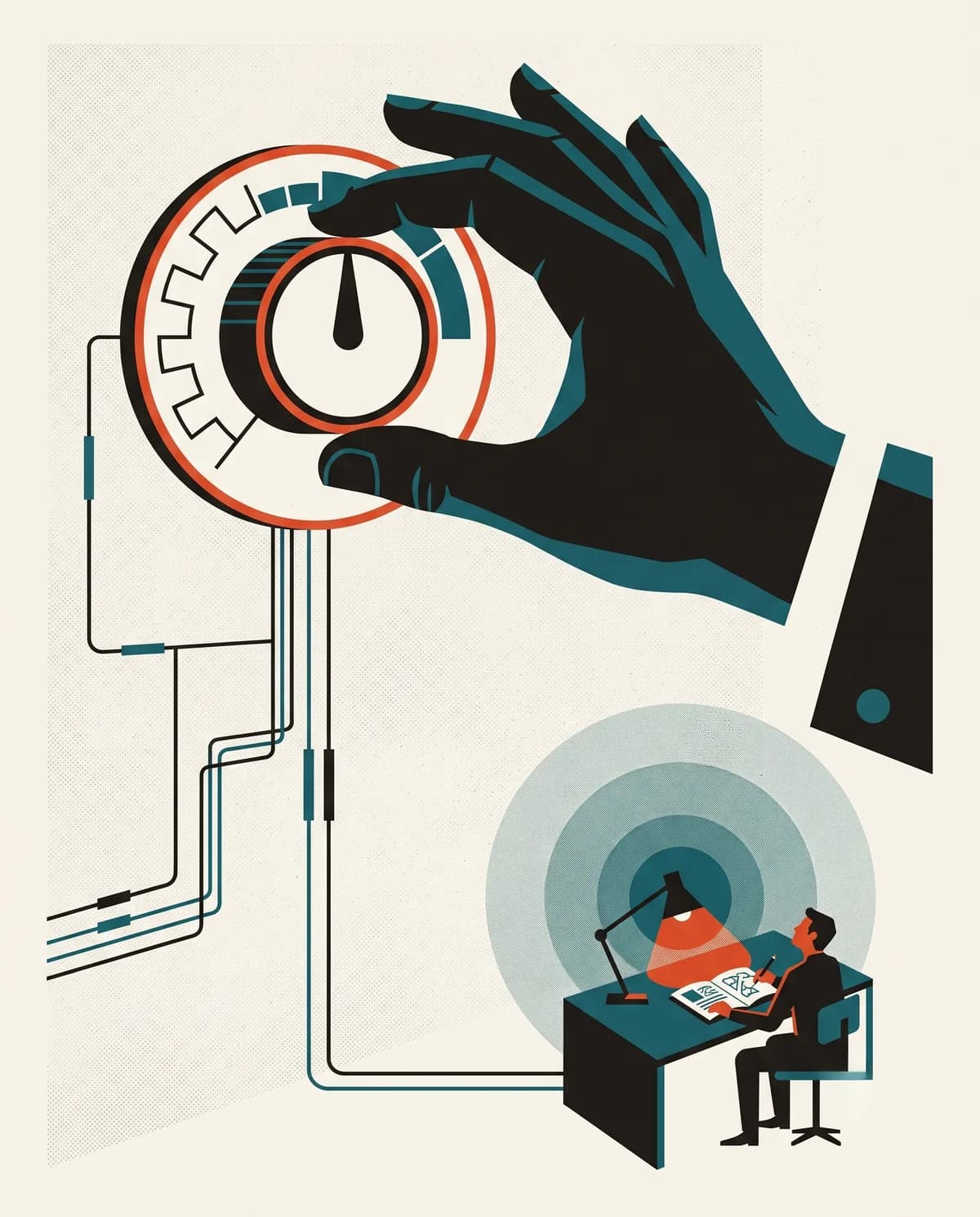
I narrate audiobooks. The anti-AI position in literature is correct, and it has also curdled into something that eats its own. Both of those are true at once, and holding them at the same time is the harder job.
Nobody has ever made art from inside a foreclosure.
That is the whole diagnosis. What we actually do about it is a farm, and it needed room to itself. The tractor does the heavy half. A person still decides what to plant, when to pick it, and what never leaves the field.
Watch somebody leave their cart across an empty space twenty feet from the corral. I file it, permanently, because I have never once seen that behaviour travel alone.
Now point it at agencies. One selling “human-added value” shipped a Gemini watermark on its own homepage banner. Is a watermark a big deal? By itself, no. It is also the cart in the parking lot.Nobody looked. Nobody’s job was to look. And that same nobody is on your account. The receipts are named and dated on the tell.

Every agency has a slide of numbers you cannot audit. Here is something better: the logo of this company, put through the exact process being sold, in public, every round shown, including the ones that were wrong.
“logo should be a carbon atom. element 6, thats the whole brand”
Daniel, to the machine
Three flat ellipses and six dots, the same atom icon on ten thousand science posters. Correct enough to pass, generic enough to belong to nobody.
“its just sitting there. atoms dont sit still. make it move”
Daniel, to the machine
The same flat glyph, now spinning. Motion is the cheapest upgrade there is: it feels alive and changes nothing about what the thing says.
“one thing i want you to try your hand at now is making the hero atoms circling have more three dimensional reality to them”
Daniel, to the machine
Rebuilt in 3D: tilted orbital planes, electrons that billboard so they stay round, swelling as they pass near and dimming as they fall behind, the whole atom wobbling on its axis. A real object instead of a picture of one. Still three rings. Still wrong, and nobody had noticed yet.
“im confused about the carbon atom orbits. is it not SIX orbit paths?”
Daniel, to the machine
One question broke it open. Six is the particle count, not the orbit count, and carbon's real structure is two shells holding 2 and 4. Rebuilt to the actual Bohr configuration. That audit then caught two more: the electrons were the same black as the neutrons, and they were drawn nearly the same size as the nucleons when an electron is about 1/1836 the mass of a proton. One colour per particle, corrected scale.
“also why is ONE electron brighter. why do that?”
Daniel, to the machine
Because a designer wanted a focal point and later called it “the valence electron.” Decoration wearing a lab coat. Electrons are identical particles, so singling one out encoded a difference that does not exist. Brightness now means energy level: the two inner electrons sit deeper, all four valence electrons glow, and those four are exactly why carbon builds everything alive. This panel is the live hero.
Here is the part the doom reading misses. Every hour the feed gets louder and more synthetic, an hour away from it gets more valuable. The two curves are chained together, and they climb together.
Look at who this company serves. Cooking schools in the hills. Tour operators who run the same six villages every fall. Language schools, study programs, wedding planners, the firms that move you and the ones that make it legal. On the surface they sell travel and paperwork. Underneath, every one of them sells a stretch of unrepeatable time as a person among people. That product cannot be generated at any model size.
The young already voted. When the biggest language app on earth announced it was going AI-first, its own users turned the announcement into a months-long public roasting it has never fully lived down, and the share of people who prefer machine-made content collapsed from 60 percent to 26 in three years. Read the enrollment forecasts however you like. From here it looks like a walkout forming, and a walkout needs somewhere to walk to.
Acting handed me the frame long before the machines did. The line is about the weather; the scene is about the marriage. A villa listing says three bedrooms and a pool. The scene is a week with the phones face-down where your kid finally tells you something true. People pay for the scene. Slop can only describe the pool.
Nobody has ever flown four thousand miles to talk to a chatbot. The businesses selling the real thing deserve to sound like it, and that is the whole arrangement: the real thing gets a real voice.
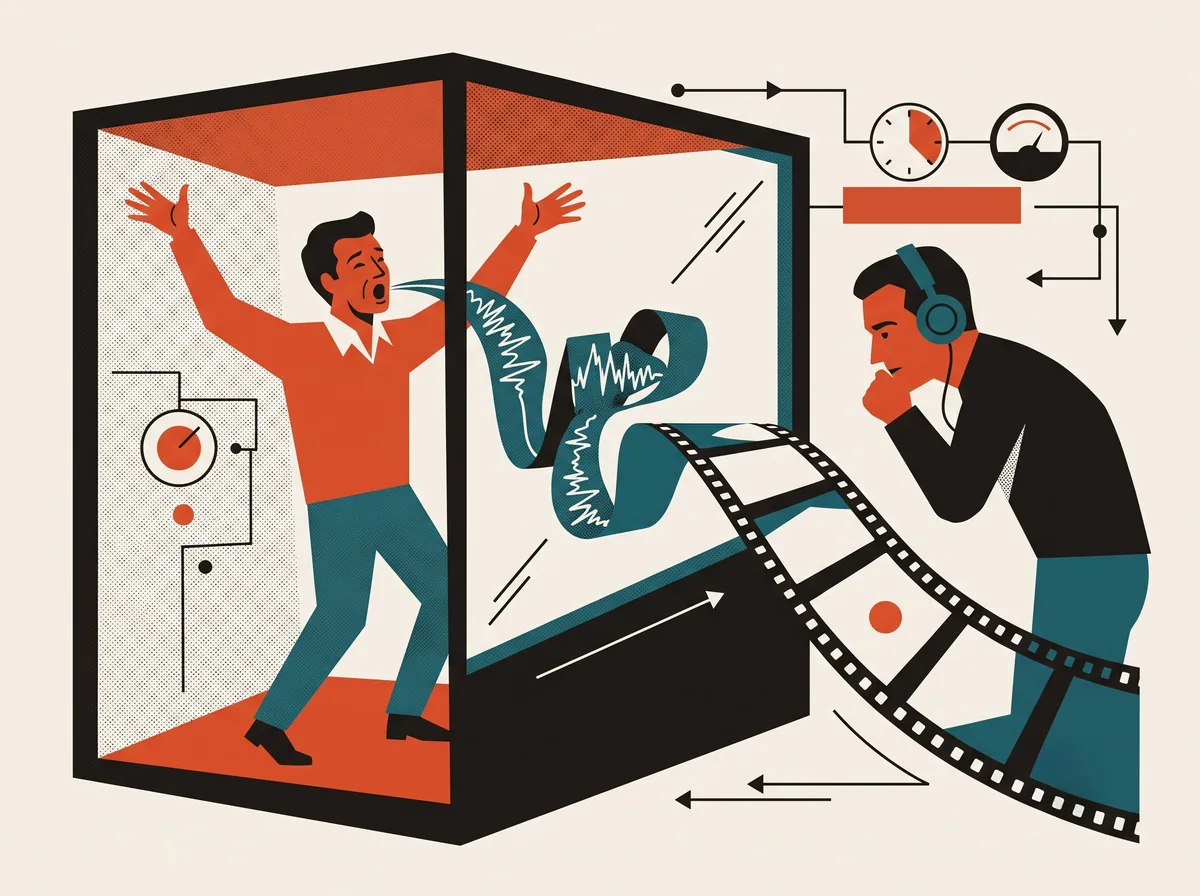
Premium audiobook studio: 100% human narration, sold direct.
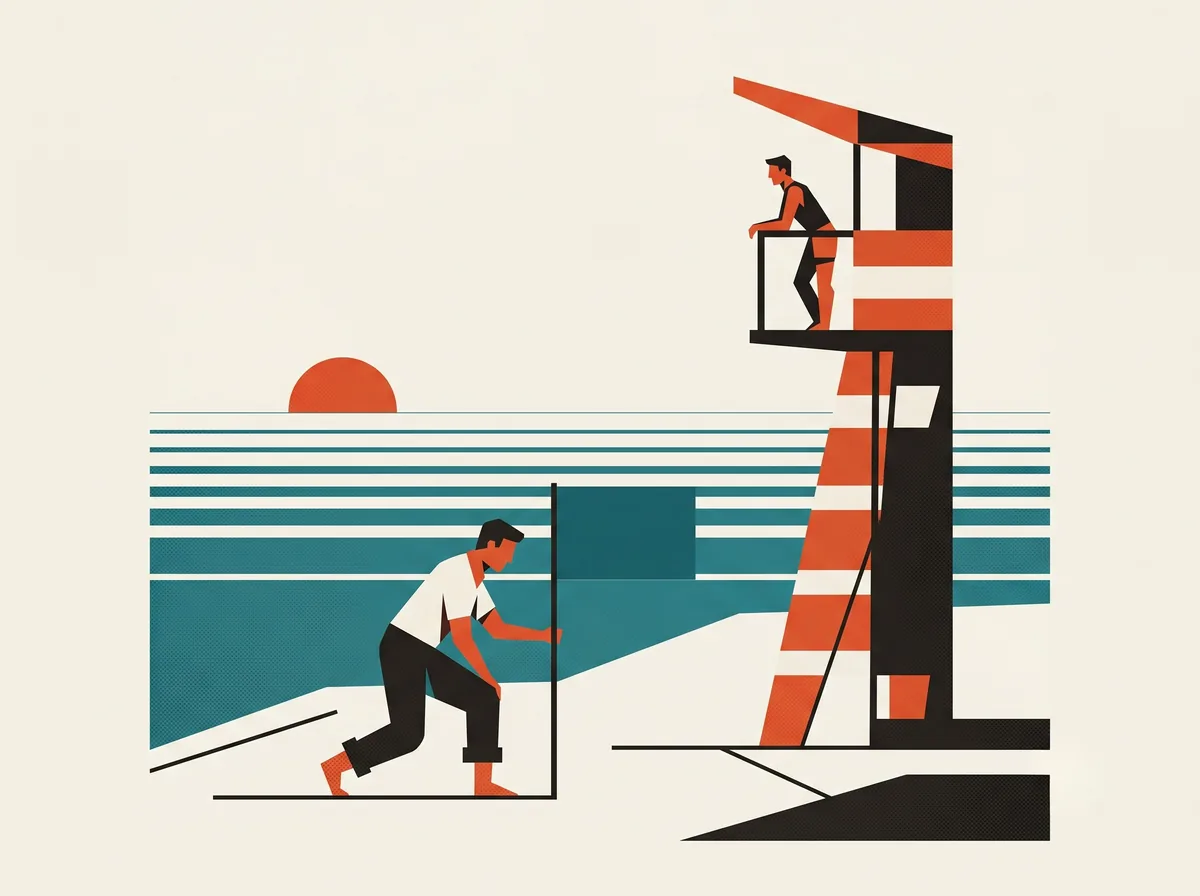
Multilingual directory of Blue Flag certified beaches and the towns behind them.
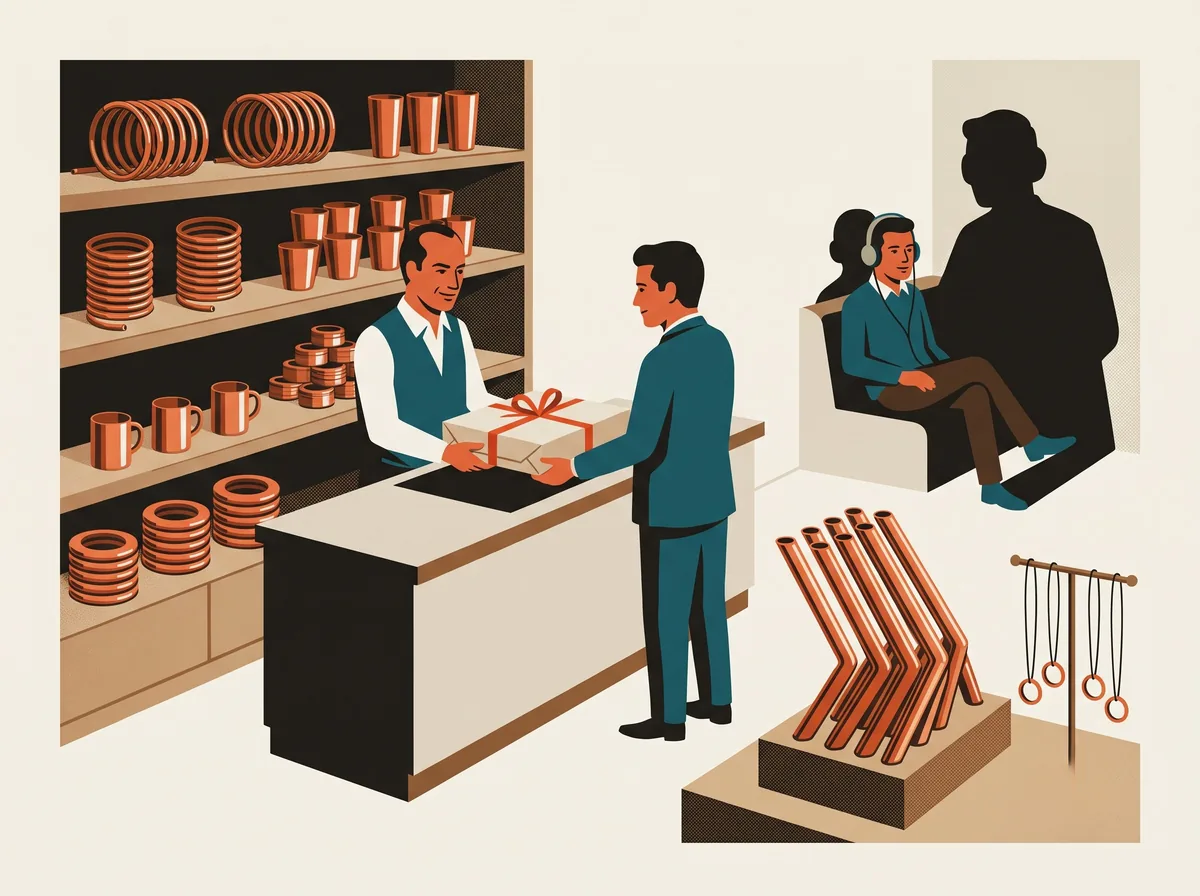
Wellness and esoterica storefront with end-to-end e-commerce.
Three here. The rest of the builds, the agency-era client sites, and the red-pen teardown live on the portfolio page.
Every channel worth running, and the accounts they’re included in, helping you plan and stay organized.
Fifteen minutes, free, and a human picks up. If we are not the right fit, you will hear that too.